
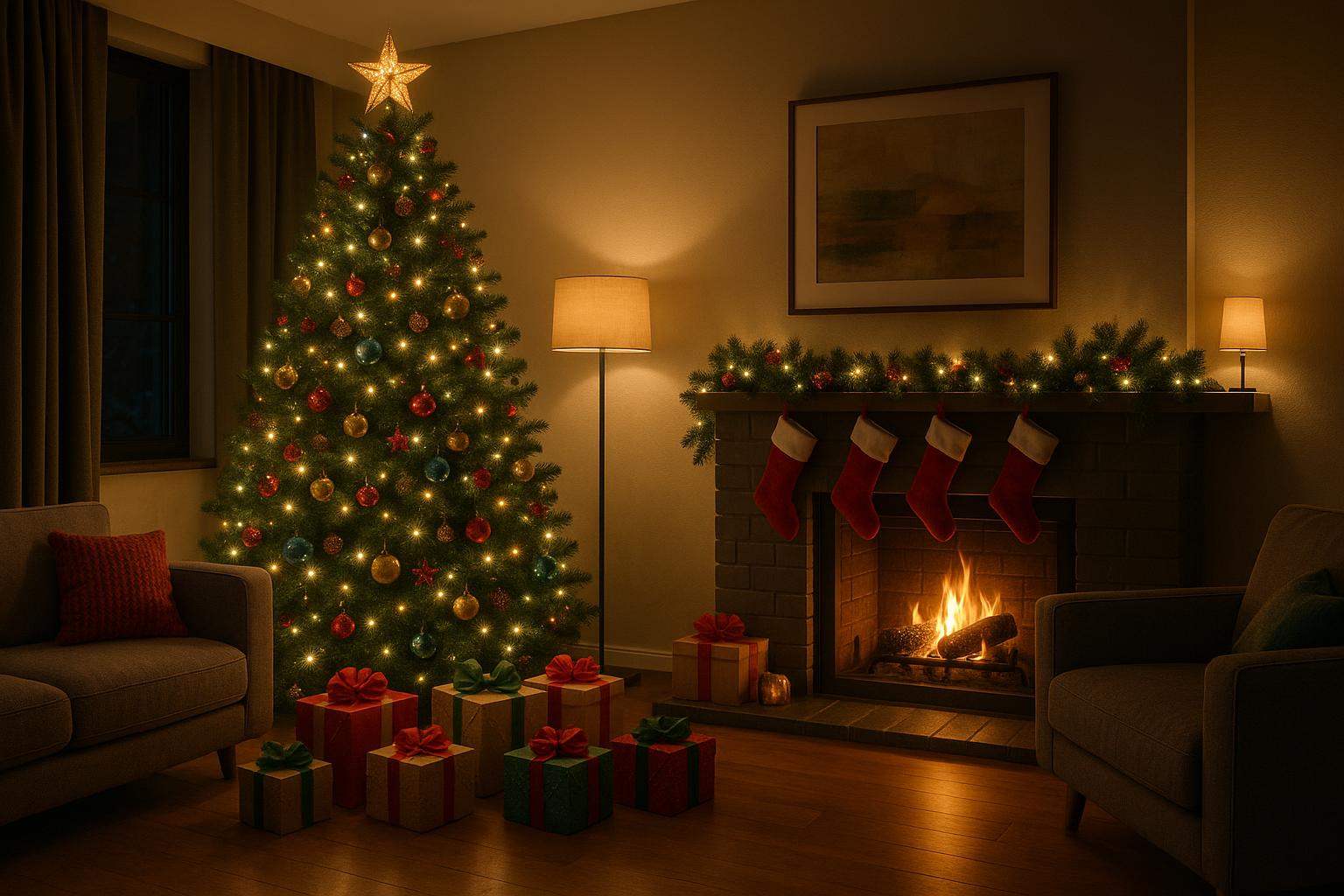
Few symbols capture the magic and warmth of Christmas quite like the decorated tree standing proudly in our homes. With its twinkling lights, colorful ornaments, and the star perched at its peak, the Christmas tree has become an iconic centerpiece of holiday celebrations around the world. But have you ever wondered how this beloved tradition began? The story of the Christmas tree is a fascinating journey that spans thousands of years, weaving together ancient pagan customs, Christian symbolism, and modern cultural evolution.
Today, as families gather around their Christmas trees to exchange gifts and create memories, they participate in a tradition that connects them to countless generations before them. From the earliest winter solstice celebrations to the glittering displays in contemporary homes, the Christmas tree has evolved while maintaining its essential role as a symbol of hope, renewal, and joy during the darkest days of winter.
Ancient Roots: Evergreens in Pagan Winter Celebrations
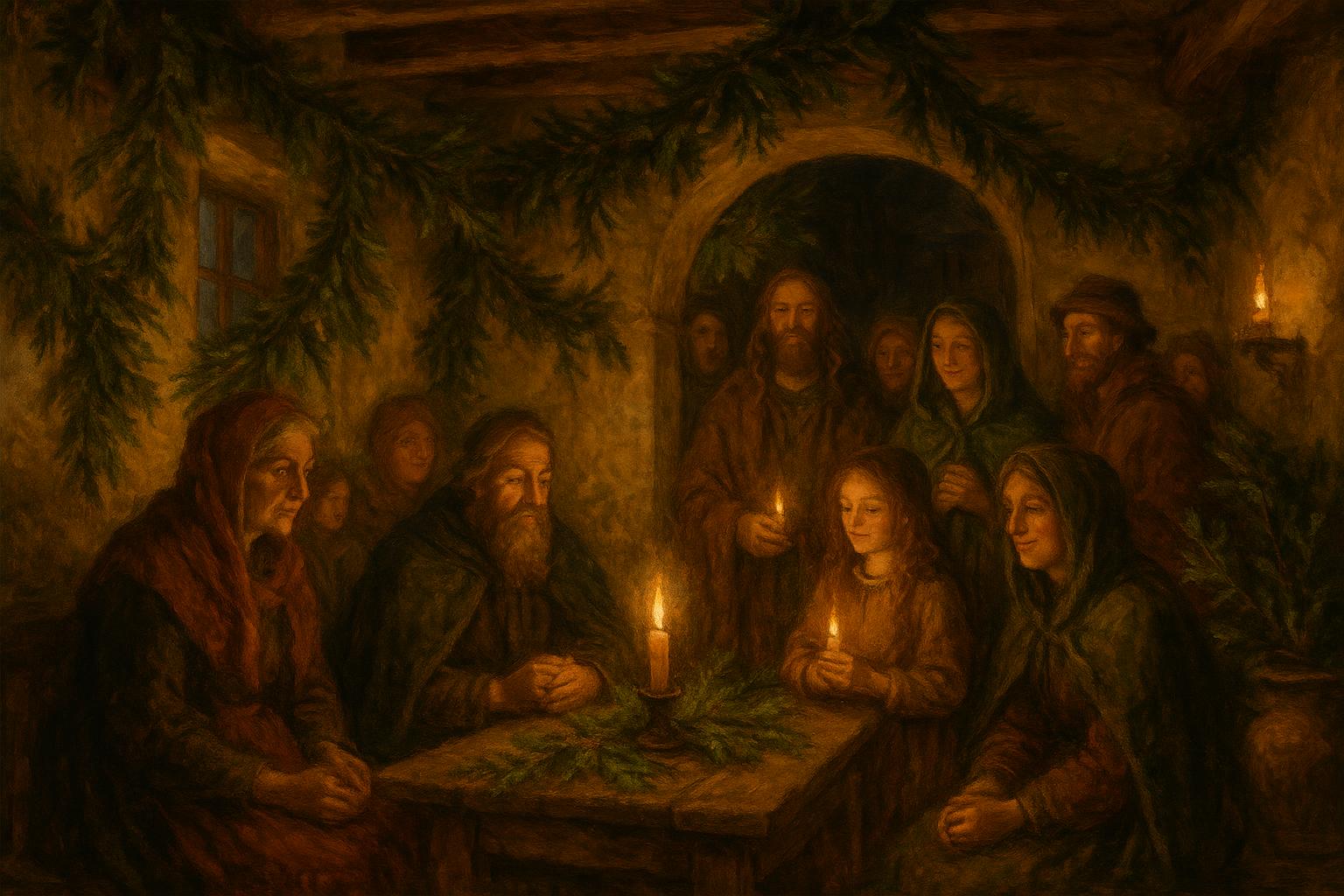
Long before Christianity spread across Europe, ancient civilizations revered evergreen plants during the winter months. The Egyptians, Romans, Celts, and Vikings all incorporated evergreen boughs, wreaths, and trees into their winter solstice celebrations. These hardy plants, which remained green and vibrant even as other vegetation withered in the cold, were seen as powerful symbols of life persisting through the harshest season.
The ancient Romans celebrated Saturnalia, a festival honoring Saturn, the god of agriculture, by decorating their homes and temples with evergreen branches. Similarly, the Celts and Vikings believed that evergreens possessed special powers to ward off evil spirits and illness during winter. They would bring branches into their homes and hang them over doorways as protective talismans.
🌿 Bring Ancient Tradition Home
Create your own evergreen decorations with beautiful artificial evergreen garlands and wreaths that last season after season. Perfect for mantels, doorways, and staircases!
Shop Evergreen Garlands on Amazon →In Northern Europe, the winter solstice marked the shortest day and longest night of the year. People celebrated this turning point by bringing evergreen trees and branches indoors, believing they would hasten the return of the sun and the arrival of spring. These ancient customs laid the groundwork for what would eventually become the Christmas tree tradition we know today.
Medieval Christianity and the Paradise Tree
As Christianity spread throughout Europe, many pagan winter customs were gradually absorbed and reinterpreted through a Christian lens. One significant development occurred in medieval Germany with the tradition of the "Paradise Tree." On December 24th, which was celebrated as the feast day of Adam and Eve, churches would display a fir tree decorated with apples to represent the Garden of Eden and the Tree of Knowledge.
These Paradise Trees were part of "mystery plays" that told biblical stories to largely illiterate populations. The evergreen fir represented eternal life through Christ, while the apples symbolized the forbidden fruit and humanity's fall from grace. Over time, as mystery plays were banned in many areas, families began recreating these Paradise Trees in their own homes, adding candles to represent Christ as the light of the world.
The German Christmas Tree Tradition Takes Root
Germany is widely credited with starting the modern Christmas tree tradition as we know it. By the 16th century, devout Christians in Germany were bringing decorated trees into their homes. Some sources suggest that Protestant reformer Martin Luther was among the first to add lighted candles to a tree, inspired by the beauty of stars twinkling through evergreen branches during a winter evening walk.
The tradition gradually spread among German households, with trees being decorated with apples, nuts, dates, pretzels, and paper flowers. Families would gather around their Christmas trees on Christmas Eve to sing carols and exchange small gifts. This intimate family tradition would eventually capture the imagination of the entire Western world.
✨ Create Your Own German-Inspired Tree
Decorate like the Germans did with traditional wooden ornaments, nutcrackers, and vintage-style glass baubles. These timeless decorations bring authentic Old World charm to your tree!
Shop Traditional German Ornaments →Victorian England and the Royal Seal of Approval
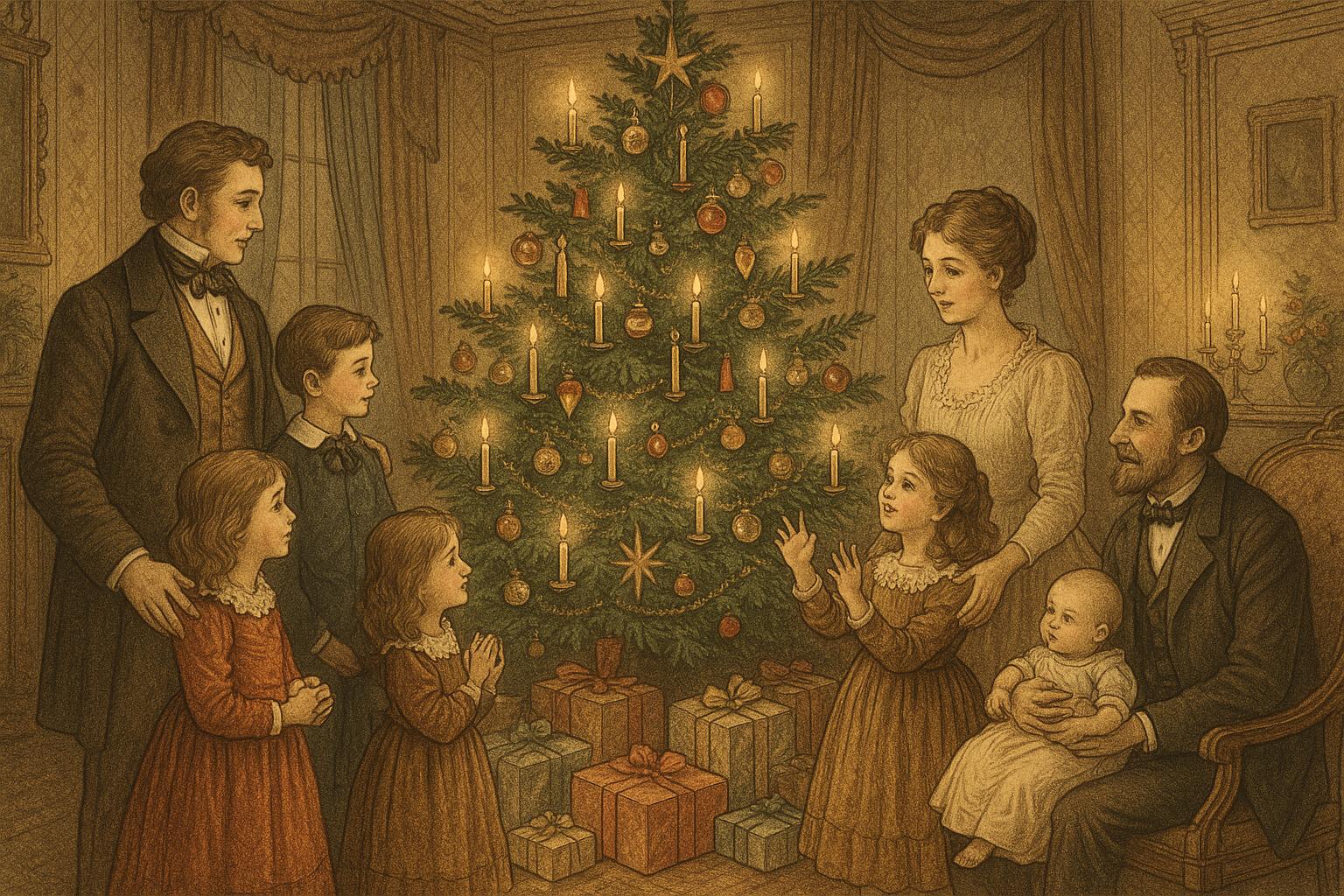
The Christmas tree tradition arrived in England through royal connections to Germany. Queen Charlotte, wife of King George III, is credited with introducing the Christmas tree to English court society in the early 1800s. However, it was Queen Victoria and her German-born husband, Prince Albert, who truly popularized the Christmas tree in Britain and, by extension, throughout the English-speaking world.
In 1848, the Illustrated London News published a drawing of the royal family gathered around their decorated Christmas tree at Windsor Castle. This image, widely reproduced in newspapers and magazines, showed the Queen, Prince Albert, and their children admiring a magnificent tree adorned with candles, ornaments, and gifts. The illustration captured the public imagination and sparked a Christmas tree craze throughout Britain and America.
The Victorian era transformed the Christmas tree from a German curiosity into an essential element of Christmas celebration. Trees became more elaborate, decorated with handmade ornaments, candies, fruits, nuts, and homemade decorations. The tradition of placing gifts beneath the tree also became established during this period, as Christmas evolved into a more family-centered and gift-giving holiday.
👑 Victorian Elegance for Your Tree
Recreate the opulence of Victorian Christmas with vintage-inspired ornaments, velvet ribbons, and elegant gold decorations. Add candle-style lights for an authentic period look!
Shop Victorian Christmas Decor →The Christmas Tree Comes to America
German immigrants brought the Christmas tree tradition to America as early as the 1700s, but it initially faced resistance from Puritan-influenced communities who viewed such decorations as pagan frivolity. The tradition remained largely confined to German-American communities until the mid-19th century.
The turning point came in the 1840s and 1850s, when images of Queen Victoria's Christmas tree reached American shores. Suddenly, the Christmas tree became fashionable among American families eager to emulate royal customs. By the 1870s, Christmas trees had become common in American homes, with families decorating them with homemade ornaments, popcorn strings, and candles.
The American Christmas tree tradition continued to evolve throughout the late 19th and early 20th centuries. The introduction of electric Christmas lights by Thomas Edison's associate, Edward Johnson, in 1882 made trees safer and more spectacular. By the early 1900s, Christmas trees had become an integral part of American holiday celebrations, with the tradition of the White House Christmas tree beginning in 1889.
💡 Modern LED Christmas Lights
Upgrade your tree with energy-efficient LED Christmas lights that are safer, brighter, and last longer than traditional bulbs. Choose from warm white, multicolor, or color-changing options!
Shop LED Christmas Lights →Modern Christmas Tree Traditions
Today, the Christmas tree remains the centerpiece of holiday decorations in homes around the world. While real evergreen trees continue to be popular, artificial trees have become increasingly common, offering convenience and reusability. Modern trees are adorned with an ever-expanding variety of ornaments, lights, and decorations that reflect personal style and family traditions.
The tradition has also expanded beyond the home. Public Christmas trees have become important community symbols, with famous examples including the Rockefeller Center tree in New York City, the National Christmas Tree in Washington D.C., and countless trees in town squares and shopping centers worldwide. These public displays bring communities together and create shared holiday experiences.
Contemporary Christmas tree traditions also reflect growing environmental awareness. Many families now choose sustainably grown trees from local farms, participate in tree recycling programs, or invest in high-quality artificial trees that can be used for many years. The tradition continues to adapt while maintaining its essential role in holiday celebrations.
🎄 Premium Artificial Christmas Trees
Invest in a beautiful pre-lit artificial Christmas tree that looks realistic and lasts for years. No needles to clean up, and ready to decorate in minutes!
Shop Artificial Christmas Trees →Celebrate the Tradition with Handcrafted Christmas Decor
Just as the Christmas tree tradition has evolved over centuries, modern craftsmanship continues to create new ways to celebrate this beloved symbol. Our handcrafted 3D printed Christmas tree decoration captures the timeless beauty of the Christmas tree in a unique, sustainable form.

This beautiful decoration features vibrant green layered branches adorned with colorful red and gold ornaments, topped with a golden star. The centerpiece is a stunning red and gold hanging bauble with an intricate design that captures the elegance of traditional Christmas ornaments.
Crafted from eco-friendly PLA filament, this piece combines festive tradition with modern sustainable design. It serves as a perfect tabletop centerpiece, shelf decoration, or thoughtful gift for Christmas enthusiasts.
Shop This Christmas Tree DecorationThe Symbolism of the Christmas Tree
Throughout its long history, the Christmas tree has carried deep symbolic meaning. The evergreen nature of the tree represents eternal life and the promise of spring's return. In Christian tradition, the tree's triangular shape is said to represent the Holy Trinity, while its pointing toward heaven symbolizes humanity's connection to the divine.
The lights that adorn Christmas trees, whether candles or electric bulbs, represent Christ as the light of the world, bringing hope and illumination to the darkness of winter. The star or angel placed at the tree's peak recalls the Star of Bethlehem that guided the Wise Men to the newborn Jesus.
⭐ Beautiful Tree Toppers
Crown your tree with a stunning star or angel tree topper. Choose from classic designs to modern LED-lit options that add the perfect finishing touch!
Shop Tree Toppers →Beyond religious symbolism, the Christmas tree has become a universal symbol of family, togetherness, and the joy of giving. The tradition of gathering around the tree to exchange gifts and create memories connects families across generations and cultures.
Christmas Tree Traditions Around the World
While the Christmas tree tradition originated in Germany and spread through Western culture, different countries have developed their own unique customs and variations. In Mexico, families often decorate their trees with traditional ornaments and add nativity scenes beneath them. In Japan, where Christmas is celebrated more as a secular holiday, illuminated trees have become popular decorations in shopping districts and homes.
In Scandinavian countries, Christmas trees are often decorated with traditional straw ornaments, flags, and heart-shaped baskets. Australian families, celebrating Christmas during summer, sometimes decorate outdoor trees or use native plants like the Christmas Bush. These variations demonstrate how the Christmas tree tradition has been adapted to fit different cultural contexts while maintaining its essential spirit.
🌍 International Ornament Collections
Celebrate global traditions with ornament sets from around the world. From Scandinavian straw decorations to Mexican folk art, add cultural diversity to your tree!
Shop International Ornaments →A Living Tradition
The history of the Christmas tree is a testament to humanity's enduring need for symbols of hope, light, and renewal during the darkest time of year. From ancient pagan celebrations to medieval Christian traditions, from Victorian parlors to modern living rooms, the Christmas tree has evolved while maintaining its essential magic.
As we decorate our trees each December, we participate in a tradition that connects us to countless generations before us. Whether we choose a towering fir covered in heirloom ornaments or a small tabletop tree adorned with handcrafted decorations, we honor a custom that has brought joy and wonder to families for centuries.
The Christmas tree reminds us that even in the coldest, darkest days, life persists, hope endures, and the promise of renewal awaits. It stands as a symbol of all that is best about the holiday season: family, tradition, generosity, and the simple joy of gathering together to celebrate.